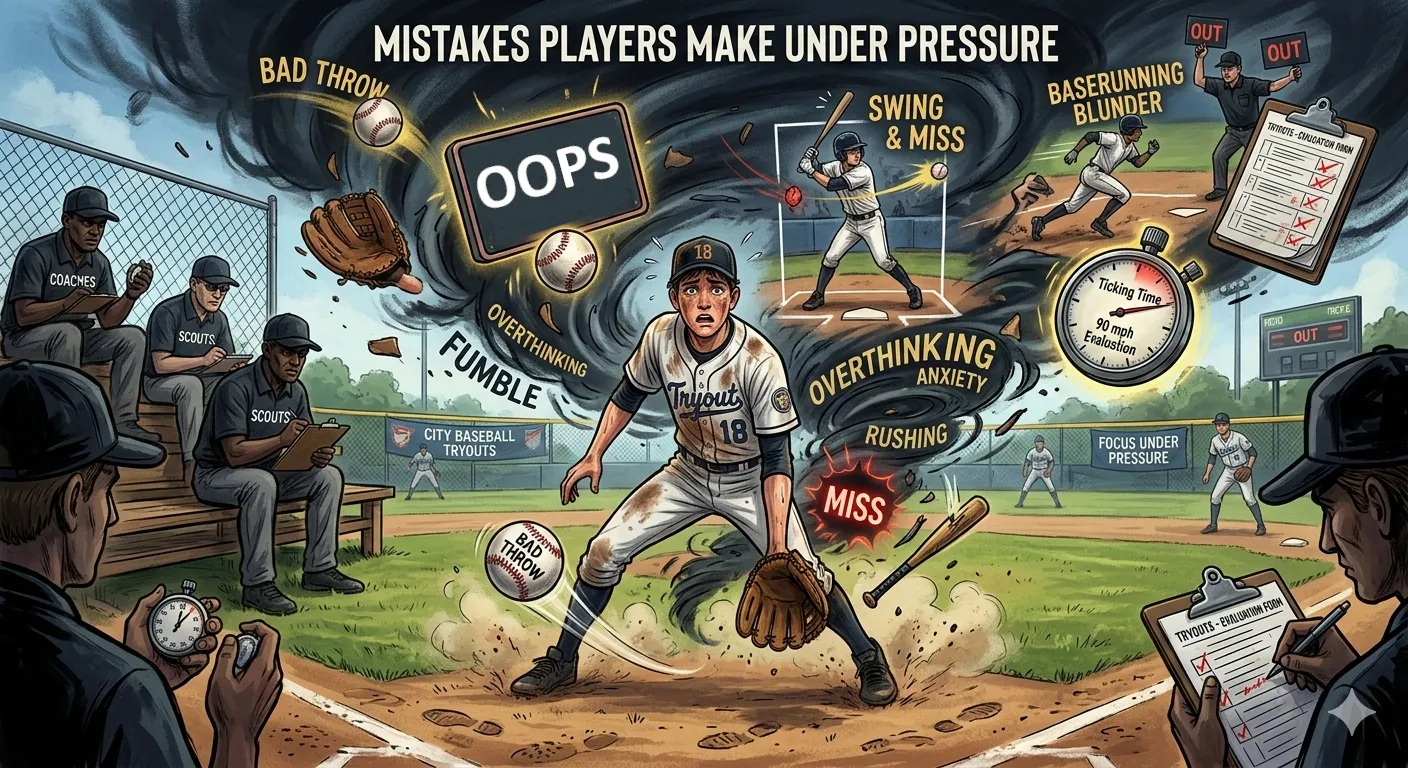
Every parent who’s ever watched their kid play baseball knows the face.
The one that shows up after a strikeout, or an error, or a swing so off‑timing it might as well have been happening in a different inning. The face that says:
“I’m done. I’m not coming back from that one.”
My son wore that face like a mask for an entire season.
And it was always the same pattern. He’d start loose, shoulders relaxed, steps light, grin showing through the eye black. He’d play as the game belonged to him. Not because he was cocky, but because he was free.
Then one mistake, and all that anxiety would come flooding back.
Just one.
A bobbled grounder. A strikeout on three straight chases. A throw that sailed so high it needed FAA clearance. And I’d see it hit him, the Invisible Error, as the book now calls it. That moment where the physical mistake ends, but the mental one starts digging in its claws.
He wouldn’t say anything. Didn’t have to. His whole body said it for him, shoulders sinking, breath turning shallow, eyes somewhere far away from the actual field. And once that switch flipped? His game was over before the next pitch even left the pitcher’s hand.
I tried all the parent things.
“You’re fine.”
“Shake it off.”
“You’ll get the next one.”
All useless.
Like trying to duct‑tape a dam.
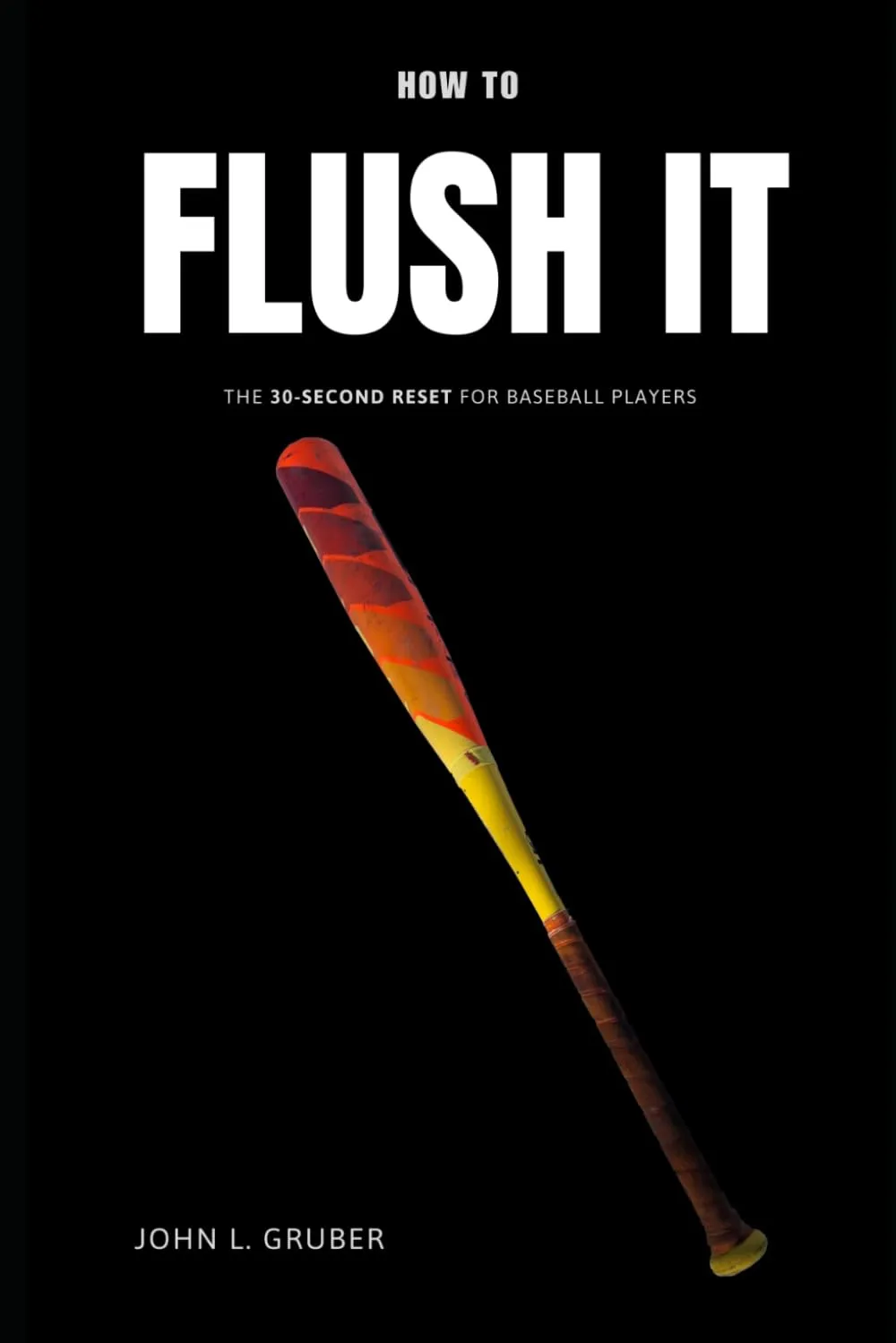
Then we found this small, honestly unassuming book:
How to Flush a Bad Play: The 30-Second Reset for Young Baseball Players
I didn’t expect much. Maybe some generic pep talk, maybe a few clichés packaged nicely. But it wasn’t that. Not even close.
This book, at least for my kid, was a lifeline disguised as a paperback.
THE FIRST SHIFT: NAMING THE PROBLEM
Right out of the gate, the book hits with this idea of The Invisible Error, the mental replay that actually sinks a kid, not the mistake itself. I watched my son read that chapter as someone had finally described the monster he’d been fighting.
He wasn’t broken.
He wasn’t weak.
He was just spiraling.
And spiraling has a pattern. A beginning, a middle, and thank God, a way out.
THE RITUAL THAT SAVED HIM
The “Dump” Ritual chapter lays out this ridiculously simple three‑part reset
a word, an action, a breath.
That’s it.
No therapy session.
No hour-long lecture.
Just a tiny, personal ritual.
My son picked his word: “Next.”
His action: one quick glove tap.
His breath: slow in, slow out, the kind where the shoulders finally drop that half inch.
And the first time he tried it in a real game?
He struck out. Badly. The kind where you can tell the pitcher knew it was over before the bat even moved.
I waited for the face.
The shoulders.
The disappearing act.
Instead, he turned away from the plate, tapped his glove once, whispered “Next,” and let out that slow, deliberate breath.
And something wild happened.
He came back.
Not in some Hollywood walk-off-hit way.
He just played like himself again, loose, steady, present.
He didn’t vanish inside his own head.
You don’t realize how much of baseball is mental until you watch a kid come back from his own spiral in real time.
THE PART THAT HIT ME THE HARDEST
There’s a section later in the book about the “Post‑Game Memory Dump”. It’s basically the opposite of what most parents accidentally do on the drive home.
Instead of breaking down every mistake like unpaid analysts, the book says the only right thing to say is:
“I love watching you play.”
Then shut up.
That one hurt.
In a good way.
We tried it.
One rough night, he dumped all his mental junk, out loud, messy, no fixing, no solutions. Just getting it out. Then he was done with it. And we didn’t drag the game home like a suitcase full of regret.
The next day?
He played free again.
Turns out kids aren’t fragile.
They’re just carrying too much.
THE CHANGE THAT STILL MAKES ME SMILE
The real difference didn’t show up in his stats. It showed up in the way he stood on the field. In the way, he didn’t shrink after a mistake. In the way, he didn’t apologize for existing. In the way he stayed connected to his team even when he wasn’t having a good day.
He learned how to fail without falling apart.
He learned how to reset without me doing it for him.
He learned how to stay in the game, not the scoreboard one, the one happening inside his chest.
And honestly?
Handling stress is a skill worth more than any win.