When my daughter first started pitching, she had the classic new‑pitcher glow: obsessed, determined, and way too stubborn to admit her arm hurt. By mid‑season, she was fading fast. She’d make it through maybe two, maybe three innings before her shoulder felt like it was buzzing, almost numb, and her velocity cratered.
I did the parent thing where you pretend you’re calm, but internally you’re thinking, Great, she’s twelve and already cooked her arm.
So we went to someone who actually knows what they’re talking about: a pitching‑specific movement coach. He watched her throw for about two minutes and asked, “Does she do daily external rotations?”
She didn’t.
I didn’t even know what those were.
Turns out they’re the foundation, the foundational movement every softball pitcher should be doing. The best part, all they take are exercise bands. We can easily throw them in the car, her bookbag, they go with us to every tournament, she uses them before practices, during breaks... All the time. We found some exercise bands on Amazon, but you can buy them from any sporting goods store.
What External Rotations Actually Do (in normal‑person language)
There’s a tiny group of muscles buried deep in the shoulder called the rotator cuff, and within that pack is a smaller set that handles external rotation. Think infraspinatus and teres minor, the unsung janitors of the pitching world. They don’t make you look muscular. They don’t do anything dramatic. They just keep the head of your humerus (the ball of your shoulder joint) centered where it belongs.
When these muscles are weak, everything else has to overwork to compensate. The shoulder drifts forward. The arm drags. Mechanics get sloppy. And that slow burn your kid complains about? That’s the rotator cuff begging for a little help.
External rotations give that help. They build the stability a pitcher needs before they start throwing hard or a lot.
Why They’re So Important for Pitchers
Windmill pitching is sneaky. It looks “natural,” but it’s extremely repetitive and relies on a high‑speed rotation of the shoulder joint. Every pitch is a mini, controlled explosion.
If the rotator cuff can’t control the joint, everything around it works harder, biceps, deltoids, even the upper back. Fatigue shows up early. The release point wanders. Speed drops.
And sometimes, if you’re unlucky, pain shows up too.
This is why pitching coaches and PTs almost universally preach band work. External rotations are the cornerstone. They keep the shoulder from wobbling around at 80% effort, which means you get more innings, cleaner mechanics, and fewer panicked “ice the arm” nights.
How to Do External Rotations Without Overthinking It
No need to complicate it.
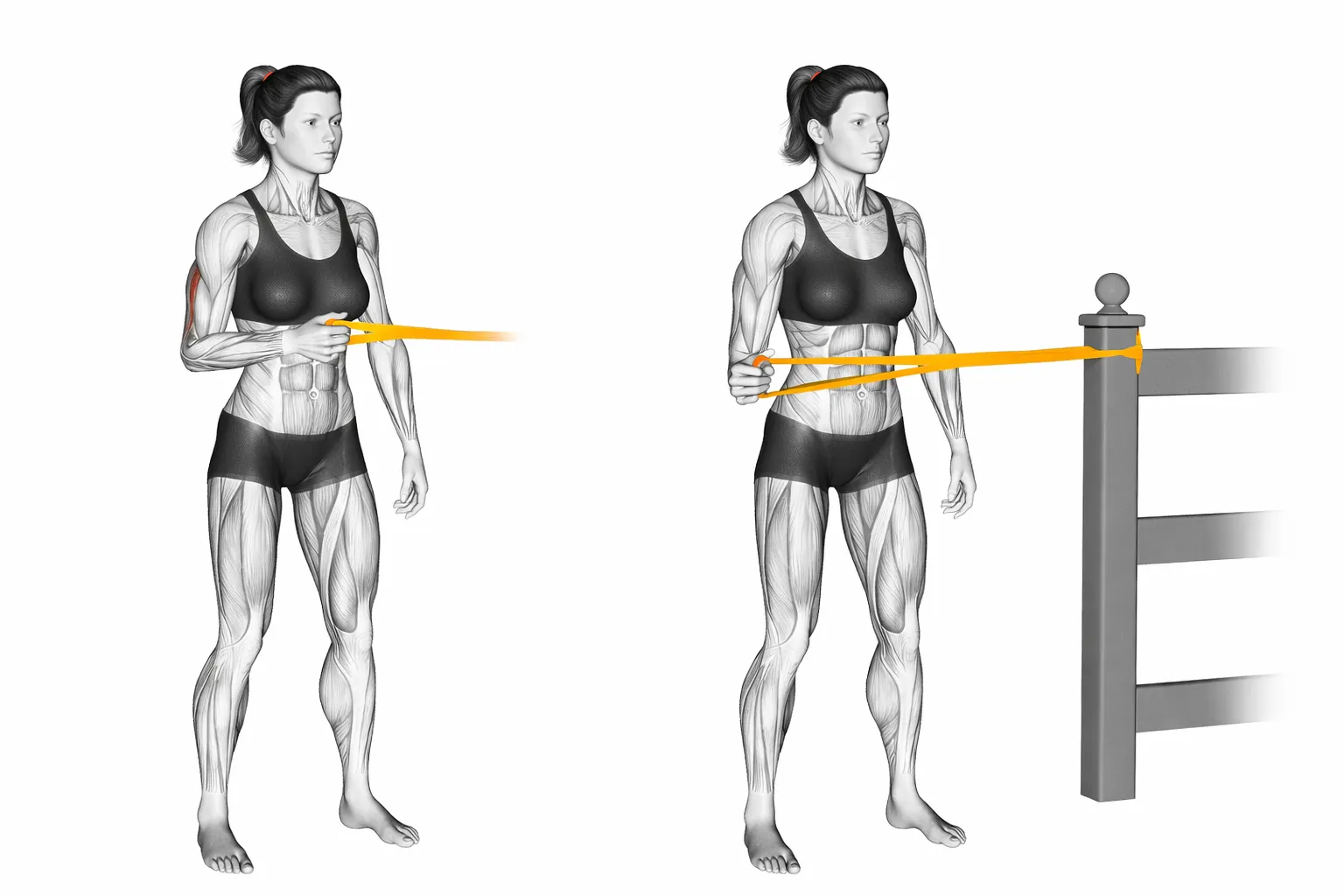
Anchor a resistance band at elbow height.
Pin your throwing‑side elbow to your ribs.
Hold the band with your elbow bent at 90 degrees.
Rotate your hand outward, slow, steady, then return with control.
It’s not supposed to look impressive. If you see your daughter trying to muscle through it or twist her torso to cheat, the band is too heavy. The goal is smooth movement, not heroics.
How Many and How Often?
Here’s exactly what the expert recommended for my daughter, and what’s worked insanely well for her since:
Her coach had her start with:
- 2–3 sets
- 12–15 reps
- Light band. (The second the form gets sloppy, she switches to lighter)
- Slow tempo. Seriously, slow is where the magic happens.
It was the consistency that made the difference, not the intensity. Every. Day.
We do these 5 exercises daily with the above amounts.
Before warm‑ups? Yes.
On non‑throwing days? Absolutely.
After a tournament weekend? Especially then.
Within a few weeks, she wasn’t just lasting longer; she was finishing full games without that drained, sagging‑shoulder look. Her accuracy improved. Her arm slot stopped drifting. And her confidence shot up in a way that probably mattered more than everything else combined.
Check out all 5 exercises she does with bands below: