If you've spent any time shopping for baseball bats, you've probably seen the letters "BBCOR" stamped somewhere near the handle. For many parents and players, it feels like one more confusing acronym in a sport already packed with them. USSSA. USA Baseball. BESR. BBCOR. It can start to sound like alphabet soup.
The truth is that BBCOR is one of the most important standards in modern baseball. It affects performance, safety, player development, and high school eligibility. In many cases, it determines whether a bat can even touch the field during a game.
Let's unpack exactly what BBCOR certified means, why high schools require it, and what players should know before spending hundreds of dollars on a new bat.
What Does BBCOR Mean?
BBCOR stands for Bat-Ball Coefficient of Restitution.
That sounds intimidating, but the concept is pretty straightforward.
The coefficient of restitution measures how much energy is transferred when a bat strikes a baseball. Think of it as a way to measure the "trampoline effect" created by a bat.
When a baseball hits the barrel of a bat, the ball compresses and the bat flexes slightly. Some bats flex so much that they essentially launch the ball back with extra speed. That extra rebound can dramatically increase exit velocity.
BBCOR certification limits that rebound effect.
In simple terms, BBCOR standards ensure that non-wood bats perform more like traditional wood bats rather than acting like spring-loaded launchers.
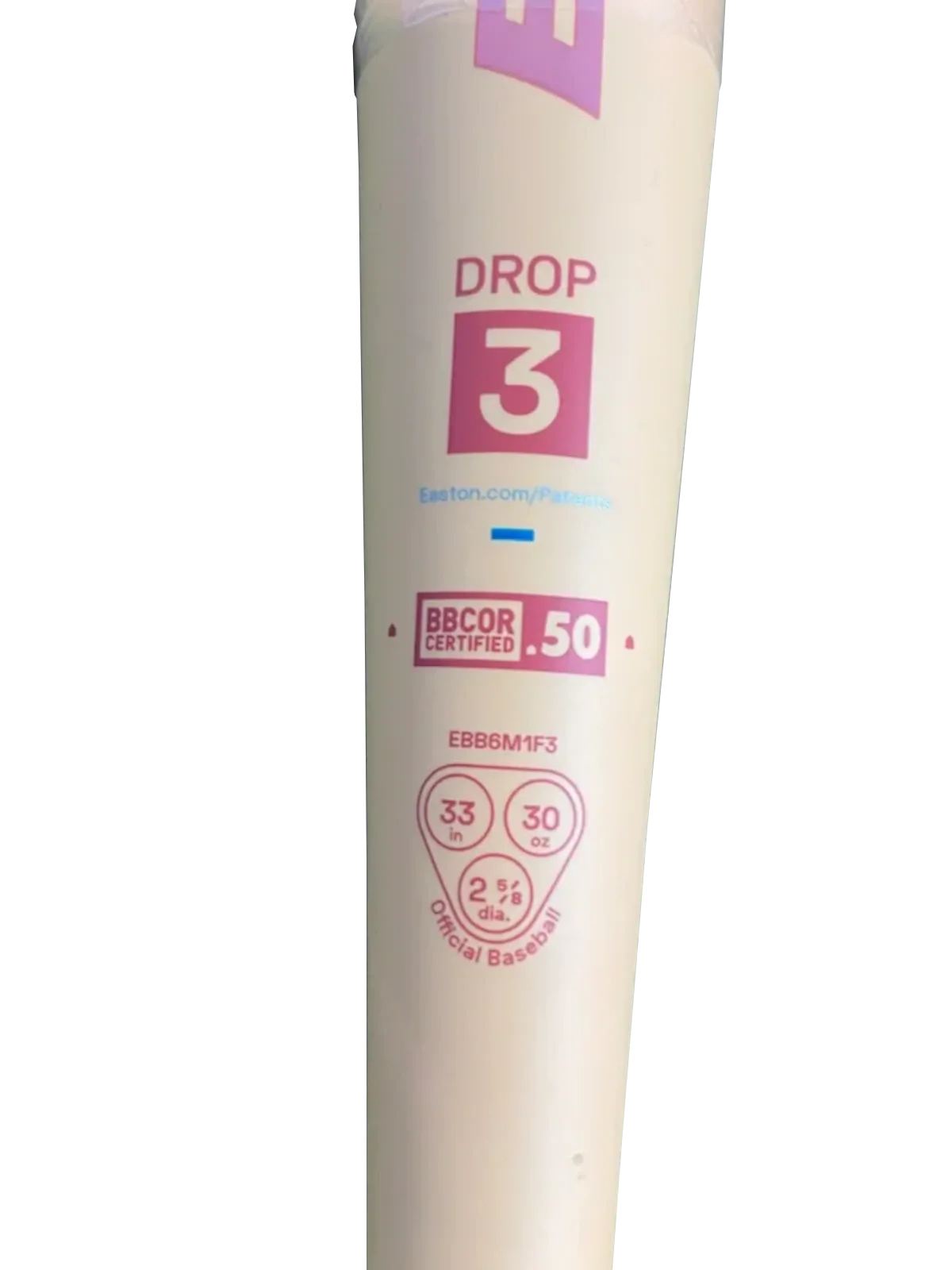
The maximum allowable BBCOR value is 0.50. Any bat that exceeds that limit cannot receive BBCOR certification.
Why Was BBCOR Created?
To understand BBCOR, you have to go back a little.
During the early 2000s, aluminum and composite bat technology advanced rapidly. Manufacturers were constantly finding ways to create more barrel flex and more trampoline effect.
The results were obvious.
Balls were flying farther.
Batting averages climbed.
Pitchers had less reaction time.
In some games, exit velocities became alarmingly high.
While everyone loves home runs, there was growing concern about player safety. A baseball traveling over 100 mph gives infielders and pitchers very little time to react.
The sport started facing an uncomfortable question:
Had bats become too powerful?
Governing bodies thought so.
The National Federation of State High School Associations (NFHS) and the NCAA eventually transitioned to BBCOR standards to reduce excessive bat performance and bring non-wood bats closer to wood-bat behavior.
The goal wasn't to eliminate offense.
The goal was to restore balance and improve safety.
What Makes a BBCOR Bat Different?
The biggest difference is performance regulation.
A BBCOR bat is engineered to comply with specific limits on energy transfer. Manufacturers cannot simply maximize trampoline effect and call it a day.
Several requirements must be met.
1. BBCOR Certification Stamp
The bat must display the official BBCOR certification mark.
This mark tells umpires, coaches, and league officials that the bat has passed testing and complies with required standards.
No stamp. No guarantee it's legal.
For most high school games, that simple logo is non-negotiable.
2. Drop Weight Restrictions
BBCOR bats must have a maximum drop weight of minus 3 (-3).
Drop weight is calculated by subtracting bat length from bat weight.
For example:
- 33-inch bat weighing 30 ounces = -3
- 34-inch bat weighing 31 ounces = -3
You won't find BBCOR bats with huge drop weights like -8, -10, or -12.
Those lighter options are common in youth baseball, but they aren't allowed under BBCOR rules.
3. Barrel Diameter Limit
BBCOR bats generally have a maximum barrel diameter of 2 ⅝ inches.
This creates more consistency across approved models.
4. Performance Testing
Manufacturers must submit bats for rigorous testing before certification.
The testing process evaluates how the bat performs during collision with a baseball and ensures it remains within BBCOR limits.
That's why two BBCOR bats can feel different but still deliver relatively similar performance compared to the wild variations seen before BBCOR standards existed.
Why Do High Schools Require BBCOR Bats?
This is probably the question most parents ask.
The answer comes down to three major reasons.
Safety
Safety is the biggest factor.
A pitcher standing 60 feet, 6 inches from home plate already has a difficult job. When a ball leaves the bat at extreme speed, the time available for reaction shrinks dramatically.
High school athletes are talented.
But they're not professional athletes.
Limiting bat performance helps reduce the danger of line drives traveling at extraordinary speeds.
Does BBCOR eliminate injuries?
Of course not.
Baseball will always involve risk.
But reducing excessive exit velocity improves player protection across the field.
Competitive Balance
Before BBCOR standards, some bats provided massive performance advantages.
Players using the hottest composite models often had a noticeable edge over those using less advanced equipment.
BBCOR narrowed those differences.
Today's certified bats still vary in feel, swing weight, and comfort, but the performance gap is much smaller.
That puts a greater emphasis on skill rather than equipment.
Many coaches view that as a positive development.
Better Player Development
This might be the most underrated benefit.
BBCOR bats reward good swing mechanics.
Players can't rely on oversized trampoline effects to compensate for poor contact quality.
You have to square up the baseball.
You have to develop bat speed.
You have to use proper mechanics.
Wood-bat leagues often reveal weaknesses in hitters who grew up relying on highly responsive youth bats. BBCOR acts as a bridge between youth baseball and higher levels of competition.
For players aiming to play college baseball, that's a significant advantage.
BBCOR vs USA Baseball Bats
One of the biggest points of confusion involves BBCOR and USA Baseball certifications.
They are not the same.
BBCOR bats are primarily designed for:
- High school baseball
- College baseball
- Some middle school leagues
USA Baseball bats are typically used in:
- Recreational youth leagues
- Little League organizations
- Younger age divisions
The performance standards differ significantly.
A 12-year-old player swinging a USA Baseball bat may use a lighter drop weight and different specifications than a 16-year-old high school player swinging a BBCOR bat.
Just because a bat is legal in youth baseball doesn't mean it's legal in high school baseball.
Always check league rules before buying.
BBCOR vs USSSA Bats
This distinction matters even more.
USSSA bats generally allow more performance than BBCOR bats.
Many travel ball players use highly responsive USSSA bats when they're younger.
Then they move into high school baseball and suddenly notice their BBCOR bat feels different.
They're not imagining it.
The bat really does perform differently.
The transition can be an adjustment because BBCOR regulations limit trampoline effect much more aggressively.
Players often experience:
- Slightly lower exit velocities initially
- Shorter fly-ball distances
- Greater emphasis on solid contact
- Increased importance of strength and mechanics
That transition catches some players by surprise every season.
Are All BBCOR Bats the Same?
Not even close.
This is where bat shopping gets interesting.
While performance limits prevent huge differences, BBCOR bats still vary significantly in feel.
Some are end-loaded.
Some are balanced.
Some are aluminum.
Some are composite.
Some use hybrid designs that combine multiple materials.
A power hitter might prefer an end-loaded model that generates more momentum through the zone.
A contact hitter may favor a balanced bat that swings faster.
Neither choice is automatically better.
It's about matching the bat to the player.
I've seen hitters crush baseballs with a bat someone else hated. Comfort matters. Confidence matters. Swing mechanics matter.
The BBCOR stamp levels the playing field, but personal preference remains important.
Common BBCOR Myths
Let's clear up a few misconceptions.
Myth #1: BBCOR Bats Kill Offense
Not really.
Good hitters still hit.
Strong players still drive the ball.
What BBCOR does is reduce artificial performance boosts from the bat itself.
The best swings continue producing the best results.
Myth #2: Composite Bats Are Always Better
This isn't true.
Many elite players prefer aluminum BBCOR bats.
Others swear by composite models.
The "best bat" option depends on swing style, feel preference, and personal comfort.
Myth #3: More Expensive Means More Power
Not necessarily.
Because BBCOR standards regulate performance, a $500 bat cannot dramatically outperform a legal $250 bat.
Premium bats may offer better feel, vibration reduction, durability, or balance characteristics, but they aren't magic wands.
Myth #4: BBCOR Bats Are Only for High School Players
Most high schools require BBCOR bats, but some middle school programs, showcases, and amateur leagues also use BBCOR standards.
Always verify league requirements.
How to Know If a Bat Is BBCOR Certified
Fortunately, this part is easy.
Look for the BBCOR certification mark printed directly on the bat.
If you're shopping online, the product description should clearly state "BBCOR Certified."
If you're buying a used bat, inspect it carefully.
Certification markings should be visible and intact.
When in doubt, confirm with the manufacturer or your league before making a purchase.
Showing up with an illegal bat on game day is a headache nobody wants.
The Bottom Line
BBCOR certification isn't just another technical baseball term. It's the standard that shapes high school and college baseball across the country.
The BBCOR system was created to limit excessive bat performance, improve player safety, encourage skill development, and maintain competitive balance. By regulating the amount of energy transferred during contact, BBCOR bats mimic wood-bat performance more closely than the ultra-hot bats that came before them.
For high school players, the takeaway is simple: if your league requires BBCOR, the stamp isn't optional. It's mandatory. Beyond legality, playing with a BBCOR bat helps prepare hitters for more advanced levels of baseball where mechanics, strength, timing, and barrel control matter far more than equipment technology.
The funny thing is that many young players initially view BBCOR as a limitation. Then they get stronger, improve their swings, and realize something important. The bat was never the star of the story.